Conversations on South Asia: The Ecosystem of Exile Politics
APR 7, 2026; TUE time changed to 4:15 - 5:30PM EST ON ZOOM register here: https://dartmouth.zoom.us/webinar/register/WN_hLU8AB3YSmWp2bun3Rg6Pw
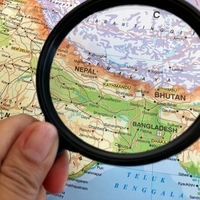
The Ecosystem of Exile Politics relays the events in Bhutan that led to the exodus of one-sixth of the population, and then recounts the activism by Bhutan's refugee diaspora that followed in response. Susan Banki asserts that activism functions like a physical ecosystem, in which hubs of activism in different locations interact to pressure the home country. For Bhutan's refugee mobilizers, physical proximity offers advantages in Nepal and India, where organizing protests, lobbying, and collecting information about government abuse in Bhutan is aided by being close to the homeland. But in an ecosystem of exile politics, proximity is both a boon and a bane. Sites proximate to Bhutan can be spaces of risk and disempowerment, and refugee activists rarely secure legal, political, and social protection. While distant diasporas in the Global North may not be in precarious situations, they cannot tap into the advantages of proximity. In examining these phenomena, The Ecosystem of Exile Politics adds to theoretical understandings of exile politics and to empirical research on Bhutan and its refugee population.
Speaker
Susan Banki, Associate Professor, School of Social and Political Sciences, The University of Sydney
Commentators
Frank Korom, Senior Scholar, School for Advanced Research and Professor Emeritus of Anthropology and Religion, Boston University
Lopita Nath, Professor and Chair of History, University of the Incarnate Word
Moderator
Faiza Rahman, Postdoctoral Fellow in the Society of Fellows and Lecturer in Religion, Dartmouth College
SPONSORED BY THE DEPARTMENT OF ASIAN SOCIETIES, CULTURES AND LANGUAGES & THE BODAS FAMILY SOUTH ASIA PROGRAMMING FUNDS AT DARTMOUTH COLLEGE