Geoeconomics
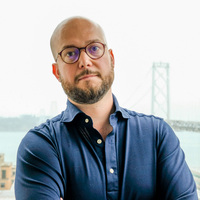
Stanford Professor Matteo Maggiori will explore geoeconomics and the new international economic order.
The world economy is undergoing the largest change since the end of the Cold War. Professor Maggiori's lecture will explain how governments apply geoeconomic pressure using their economies' trade and financial relationships. He will discuss chokepoints in global finance and supply chains, how governments use tariffs, sanctions, and export controls to apply pressure, and the implications for building a prosperous economic order.
The event is free and open to the public, but registration is required. It will also be recorded and liverstreamed.
Matteo Maggiori is the Moghadam Family Professor of Finance at the Stanford Graduate School of Business. His research focuses on international economics and finance. He is a co-founder and director of the GCAP Lab. His research topics have included the analysis of exchange rates under imperfect capital markets, geoeconomics, the international monetary system, reserve currencies, tax havens, very long-run discount rates and climate change, and expectations and portfolio investment. His research combines theory and data with the aim of improving international economic policy. He is a faculty research fellow at the National Bureau of Economic Research, where he organizes the NBER International Economics and Geopolitics (IEG) meeting, and a research affiliate at the Center for Economic Policy Research. He received his PhD from the University of California at Berkeley. Among a number of honors, he is the recipient of the Fischer Black Prize awarded to an outstanding financial economist under the age of 40, the Carnegie and Guggenheim fellowships, and the Bernacer Prize for outstanding contributions in macroeconomics and finance by a European economist under age 40.
Sponsored by the International Security and Economics Pilot, the Davidson Instiute for Global Security at the Dickey Center for International Understanding, The Michael G. Fisch 1983 Academic Cluster on Globalization, and The Center for Business, Government & Society at the Tuck School of Business at Dartmouth.