Was Integrating China into the Rules-Based International Order a Mistake?
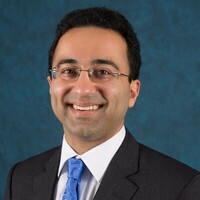
Ali Wyne, Senior Research and Advocacy Advisor, U.S.-China with International Crisis Group in conversation with Jennifer Lind, Associate Professor of Government.
For three decades, American policy rested on a wager: that drawing China into the institutions of the rules-based international order would make it a stakeholder in that order. Ali Wyne and Jennifer Lind take up the question of whether that wager paid off, what it produced, and what it means for how the United States approaches China now.
Free and open to the public. Reserve your ticket here. | The event will be livestreamed and recorded. Register for the livestream here.
Ali Wyne: As Crisis Group’s Senior Research and Advocacy Adviser, U.S.-China, Ali reports on and analyses the development of U.S. policy toward China in the U.S. Congress and the executive branch. He helps to formulate Crisis Group’s recommendations for easing tensions, managing crises, and preventing conflicts between Washington and Beijing, and works to introduce them into debates among U.S. policymakers and thought leaders.
Ali joined Crisis Group in January 2024. He previously worked at the Carnegie Endowment for International Peace (2008-09), the Belfer Center for Science and International Affairs (2009-12), the State Department (2013), the RAND Corporation (2017-20), and Eurasia Group (2020-23). He has also been a nonresident senior fellow at the Atlantic Council’s Scowcroft Center for Strategy and Security and a nonresident fellow at the Modern War Institute.
A graduate of the Massachusetts Institute of Technology and the Harvard Kennedy School, Ali is a security fellow with the Truman National Security Project, a former term member of the Council on Foreign Relations, and a former David Rockefeller fellow with the Trilateral Commission. He is the author of “America’s Great-Power Opportunity: Revitalizing U.S. Foreign Policy to Meet the Challenges of Strategic Competition” (Polity, 2022) and a co-author of “Lee Kuan Yew: The Grand Master’s Insights on China, the United States, and the World” (MIT Press, 2013).
Professor Lind holds a Ph.D. in Political Science from the Massachusetts Institute of Technology; a Master’s from the School of Global Policy & Strategy from the University of California, San Diego; and a B.A. from the University of California, Berkeley.
Professor Lind is the author of Autocracy 2.0: How China’s Rise Reinvented Tyranny (Cornell University Press, 2025). It argues that China has risen to become a superpower and technological leader – which defies the expectations of an influential school of economic thought that holds that liberal institutions are essential for innovation. Arguing that authoritarian regimes are highly heterogenous and adaptable, Lind shows that “smart authoritarianism” enabled China to not only experience catch-up economic growth but also to cultivate cutting-edge technological innovation.
Lind’s first book was Sorry States: Apologies in International Politics, which examines the effect of war memory on international reconciliation (Cornell, 2008).
Lind is also editor in chief of Blue Blaze, a multi-author Substack focusing on international relations and US foreign policy.
Co-sponsored by the Davidson Institute for Global Security and the John Quincy Adams Society at Dartmouth